Anyone who has spent time on a dock knows how the last mile can unravel a well-planned supply chain. Drivers arrive late and miss city cutoffs, a parcel hub closes ten minutes too soon, a retail location changes receiving hours, or a trailer shows up with one damaged pallet that throws off the entire route. The more touches, the more points of failure. Cross docking reduces touches. When done right, it converts inbound variability into outbound reliability.
A cross dock warehouse functions as a high-velocity transfer point. Freight moves from inbound trailers to outbound vehicles with minimal storage, often within hours. The payoff shows up in the places that matter most to customers: accurate ETAs, tighter delivery windows, fewer split shipments, and the ability to handle exceptions without burning a day. The model is not new, but the bar for execution has risen with dense urban traffic, same-day expectations, and carrier capacity swings. What follows draws from years standing next to forklifts, negotiating with dispatchers, and analyzing route data. The focus is practical: where cross docking adds leverage, where it doesn’t, and how to tell if a cross dock facility is set up to elevate last-mile performance.
What cross docking actually changes
Traditional distribution expects inventory to sit. Even fast-moving items live in pick faces. Cross docking flips the script. The building becomes a sortation engine rather than a storage facility. That change has three consequences that matter to last mile.
First, time compression. If you break the 24 to 72 hour dwell that many networks accept as normal, everything downstream can tighten. In a healthy cross dock, the median dwell drops to same-shift, sometimes same-hour. That makes it possible to receive night linehaul and still hit morning retail windows or e-commerce cutoffs.
Second, load integrity. Last-mile failures often trace back to incorrect trailer building. Items for a route get stranded on a different truck, or a driver arrives with mixed freight that forces stop-by-stop digging. Cross docks that sort by final delivery zone and marry freight to routes boost load density and reduce handling on the street. Drivers spend time delivering rather than rearranging freight at each stop.
Third, exception containment. Reality never matches the plan. A cross dock can isolate exceptions at a point where you still have options: rework staging, inject a spare driver, partial route split, or use a different carrier. Without that option, exceptions balloon into next-day rollovers.
Anatomy of a cross dock built for last mile
Not all high-velocity facilities are equal. The physical layout and the operating rules decide whether the building speeds up the road or becomes a staging area with a fancy name.
Flow straightness matters more than any technology. I look for long, clear lanes from inbound to outbound with minimal cross traffic. Ideally, a trailer door maps to a defined outbound bank or a set of route cages without turns that invite congestion. When the floor paint tells a story and the story makes sense to a new loader within an hour, you have a good design.
Door strategy deserves attention. Many operators assign inbound doors by carrier and outbound by route zone, then hold that assignment stable. Stability lets teams set muscle memory and signage that sticks. In volatile networks, dynamic door allocation can outperform, but only if the control system is reliable and the dock team is disciplined. If you see handwritten door changes taped everywhere by noon, the algorithm is not winning.
Material handling gear often gets overcomplicated. In a pure cross dock, conveyors can help, but they are not mandatory. Pallet jacks, reach trucks for deeper bays, and well-labeled route cages usually do the job with less maintenance. Automation adds value when the parcel count is high and the parcel mix is diverse, as in an e-commerce hub sorting thousands of pieces per hour. For mixed LTL and parcels, flexible, low-profile solutions beat rigid automation that cannot adapt to weird freight.
The yard is part of the building. Too many cross docks lose time shuttling trailers around because yard maps are vague or switchers are stretched thin. A yard with clear parking rows, a live board that updates in real time, and a strict rule that inbound appointments drive door readiness will save more minutes than a new WMS.
How a cross dock tightens last-mile planning
Transportation planners care about three levers: order cutoffs, route building, and driver utilization. A cross dock can move all three.
Cutoffs widen when inbound linehaul hits the dock closer to the last-mile dispatch. For example, a regional retailer taking inbound at 2:00 a.m. in a cross dock can often accept online orders until 10:00 p.m. for next-day delivery, sometimes later. That four-hour extension translates to real revenue, because the last wave of orders often spikes in the evening. When the building converts those late orders into route-ready freight by sunrise, planners gain confidence to advertise tighter promises.
Route building improves when freight is staged by delivery zone and stop sequence, not by vendor or PO. I have seen 8 to 12 percent route distance reductions after switching to zone-based staging at the cross dock, driven by fewer backtracks and tighter load density. Planners get cleaner inputs, so they push more stops per hour without pushing drivers into overtime.
Driver utilization rises when drivers spend less time at the dock. If a cross dock team stages pallets or carts by door in route order, and if dispatch prechecks manifests, a driver can be loaded and rolling in 15 to 25 minutes for parcel routes and 30 to 45 for mixed freight. The delta between that and an hour-long scramble adds up across a fleet. In tight markets, that often means one more route per day from the same headcount.
The data loop that makes it work
The physical flow only shines if the data is tight. Cross docking creates many micro-decision points. Each one needs a time stamp and a status. The trap is to drown operators with screens. The winning approach is a thin layer of data that shows exactly what decisions matter now.
Label discipline is the first rule. If the inbound label cannot be scanned and tied to a route, the building is blind. That means enforcing ASN accuracy with vendors, standardizing barcode formats, and giving the dock team devices that survive concrete and diesel. I have watched operations falter because a third of inbound labels needed reprinting on the fly. That steals minutes from everyone.
Dock management systems do not need to be fancy. They need to show three things reliably: what is due inbound, what is on the floor and to which route it belongs, and what remains to load before dispatch. If those three views are right, supervisors can pace the shift. Add simple SLA clocks per route that turn red with ten minutes to go and results improve.
Outbound visibility links the cross dock to customer promises. When a route leaves, statuses should flow automatically to customer channels. If your last-mile platform supports real-time ETAs, tie it to the dock release instead of the first stop scan. Customers do not need to see the cross dock’s complexity, but they feel the difference when promises match reality.
Cost dynamics and the break-even logic
A cross dock warehouse adds a node, and nodes cost money. The value comes from what it prevents: dwell, rework, driver idle time, missed windows, split shipments, and zone penalties. When I build a case for a cross dock, I start with a simple model that compares three costs per order: handling, miles, and failure.
Handling cost is the per-touch labor and facility overhead. In a high-velocity cross dock, you can expect low single-digit dollars per order for parcel, and higher for bulky LTL that needs double handling. The variance depends on labor rates and throughput density. Thin volume makes cross docking look expensive; dense, predictable volume makes it shine.
Miles cost includes the linehaul to the cross dock and the last mile from it. The cross dock’s advantage comes from consolidating deliveries into shorter, fuller routes. If you can cut 10 to 20 percent of last-mile miles and eliminate duplicate trips caused by missed consolidation, you often cover the handling cost. Markets with heavy traffic or high stop density pay back faster.
Failure cost includes redelivery, appeasements, expedited reships, carrier penalties, and the soft impact of unhappy customers. This bucket is messy, but it is real. If a cross dock reduces failed first delivery attempts by even a few points, the savings add up fast. I have seen programs drop failure rates from the low teens to single digits in a quarter after moving to cross-docked route building.

The break-even tends to sit around a daily volume threshold. For parcel-centric operations, once you consistently push several hundred to a few thousand pieces per day through a facility, with predictable peaks, cross docking usually pencils. For mixed freight, look at pallet counts and cubic feet, not just orders. The key is steadiness. Spiky, unpredictable flows are hard to staff and tend to erode margins.
The San Antonio angle, and why location choices matter
If you are searching for a cross dock warehouse near me in a market like San Antonio, you are balancing geography with labor and lane coverage. The city sits at a useful junction for South Texas, with I-10 and I-35 giving north-south and east-west access. A cross dock facility in San Antonio TX can pull inbound from Dallas, Houston, and Laredo overnight, then push local delivery across Bexar County and into the Hill Country the same morning.
When scouting a cross dock warehouse San Antonio TX operators often weigh three practical factors. First, proximity to major arteries without sitting in a congestion choke. Near-airport locations look appealing, but the access roads can eat your savings at rush hour. Second, labor availability for night and early morning shifts. Cross docking lives in those hours, and reliable staffing beats a five-minute shorter drive. Third, carrier mix. If your region depends on a few key linehaul partners coming up from the border or over from Houston, ensure the facility’s appointment system can absorb their variability.
Local nuances matter. Summer heat changes battery and equipment performance. Facilities that invest in battery management and shaded staging keep productivity steadier. Construction season on the interstates can skew ETAs for months. A cross dock that monitors city DOT data and nudges dispatch times accordingly avoids building stress into the morning.
If you run a smaller operation and keep searching for cross docking services near me, check whether providers offer partial solutions. Some facilities will sell AM sortation and staging without requiring full tenancy. Others specialize by freight type, for instance furniture cross docking with blanket wrap staging versus parcel-heavy sortation. Cross docking services San Antonio providers vary widely in capability. Walk the floor during live operations, not a static tour, to tell the difference.
Where cross docking fits and where it doesn’t
Cross docking is not a universal fix. It fits best when you have multiple inbound sources feeding a concentrated delivery region, or when you need to synchronize late cutoffs with early routes. Retail replenishment, regional e-commerce, spare parts with time-sensitive SLAs, and bulky home delivery are all candidates.
It struggles when product identification is inconsistent. If SKUs arrive with poor labels or frequent mispacks, the dock turns into a reconciliation center. It also struggles with ultra-fragile goods that cannot tolerate multiple touches. In those cases, consider direct injection to delivery stations with minimal handling, or switch to packaging that removes the need for rework between linehaul and last mile.
Another edge case: hyperlocal deliveries with extremely high stop density and tiny order sizes, like meal kits or groceries in a small footprint. There, micro-fulfillment or dark stores can beat a regional cross dock, because the last mile is so tight that the extra node adds friction.
Service design at the dock edge
The best cross docks think like service designers. They consider not just pallets and parcels, but the promises attached to them. That mindset shows up in how they handle the edges.
Damage protocol is a good indicator. A strong dock catches damage immediately, photographs it, and routes the decision within minutes: rebox, reshrink, partial ship, or hold. With that discipline, drivers avoid arriving at a customer with a mystery wrap job that looks suspect. It also protects margin by avoiding full-order delays for a single compromised item.
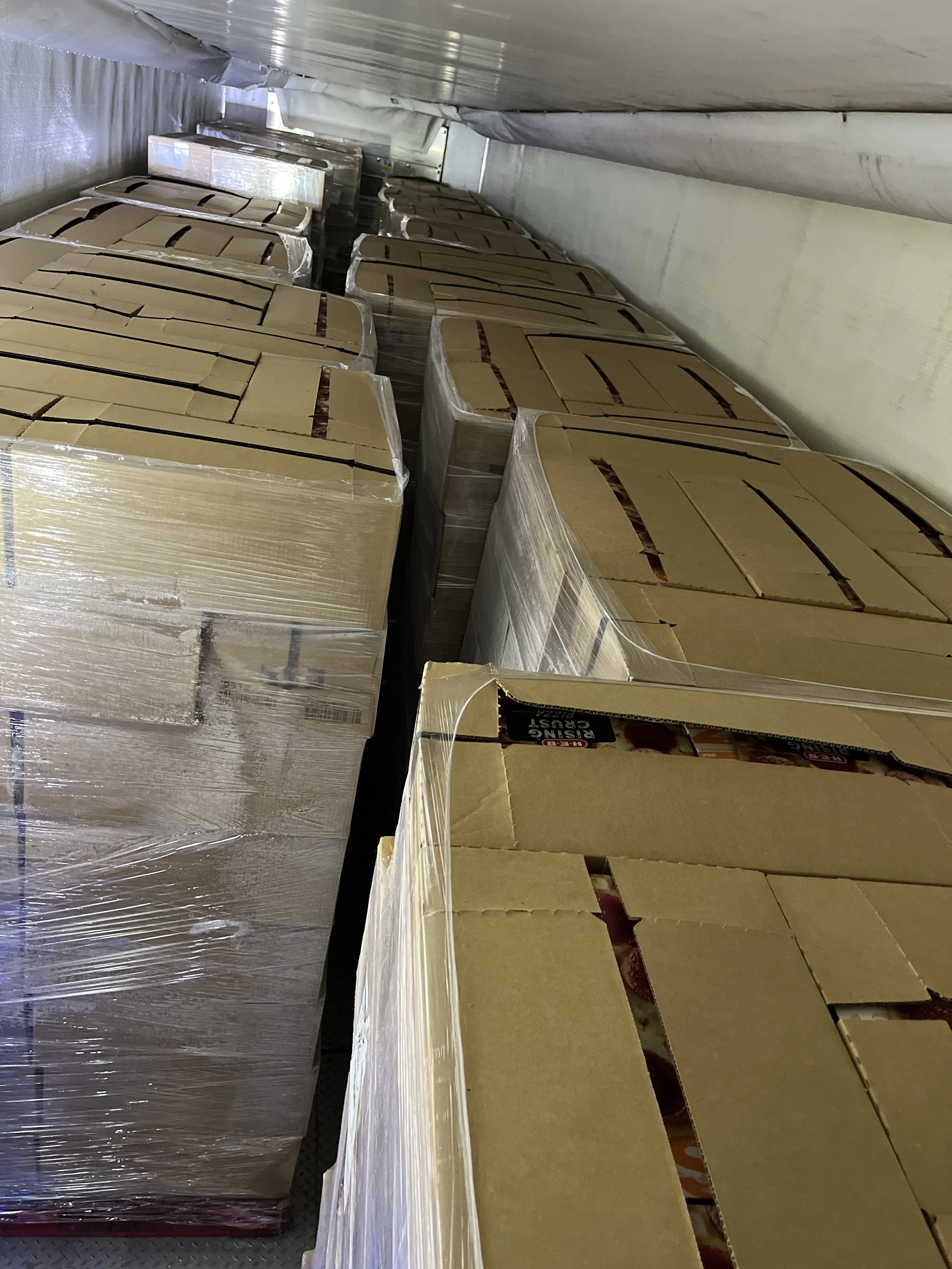
Partial fulfillment rules matter. When a multi-line order spreads across inbound trailers, decide how long to wait before splitting. In practice, most operators choose a short window, often 30 to 90 minutes, tied to hard dispatch times. The cross dock monitors the clock and makes the call proactively so the route leaves clean.
Carrier collaboration shows up in pre-advice accuracy. If your key carriers send ASNs with 95 percent plus accuracy, your dock works faster and trust builds. If carriers habitually show up outside appointments or with mismatched counts, the dock must either staff to absorb variability or push back with fees and strict thresholds. Clarity wins here. Written rules, shared scorecards, and steady enforcement improve the whole system.
Technology without the buzzwords
You do not need futuristic tools to run a high-performing cross dock. You need dependable, boring ones that operators like using. Handheld scanners that live a full shift. A simple yard management screen that updates every time a door changes. A WMS or TMS that supports wave building by route and handles exceptions cleanly. Monitors at eye level that show route readiness without making people dig.
One helpful addition is real-time traffic data integrated into dispatch. If you can nudge route release by ten minutes to dodge a known bottleneck and keep the route inside labor rules, you gain a quiet form of reliability that customers notice. Another is light pick-to-cart indicators at the sortation edge when parcel counts run high. These systems reduce mental load and training time.
Avoid overfitting technology to one freight profile. Markets shift. A system that only works for small parcels will strain when you add appliances or oversize items. Flexibility in location labeling, route grouping, and exception flows is more valuable than squeezing out the last percentage point of sort speed.
Measuring what matters
The metrics that track cross-dock impact on last mile are simple, but they need honest definitions. On-time inbound to appointment tells you whether your network is setting the dock up to succeed. Inbound to route-ready dwell time shows if the building is flowing. Route release versus planned shows scheduling discipline. First-attempt delivery success reveals whether tight staging and loading translate into results on the street. Driver dock time per departure brings discipline to how you stage and manifest.
Add a few diagnostic ratios: touches per piece, rework percentage, and mis-sort incidents per thousand pieces. You should also track labor hours per hundred pieces or per thousand pounds, depending on your freight. Over time, as volume stabilizes, these metrics should trend downward or hold steady even as complexity rises.
On a quarterly basis, review missed windows by reason code. If “route built late” or “freight not ready” make frequent appearances, the cross dock is either under-resourced or poorly sequenced. If “customer not ready” dominates, your last mile needs better appointment management and communication, not more dock speed.
The human element
The best cross docks run on small teams with strong habits. Supervisors who walk the floor, not just the office. Loaders who know that a bad label can ruin a driver’s day and who fix it before it leaves the building. Drivers who trust that their routes will be staged properly and who give feedback on stop order to improve the next build.
Training should focus on pattern recognition, not just keystrokes. Teach teams to spot misroutes by destination cues, to question loads that look wrong, to understand why a particular route always leaves at 7:10, not 7:30. When people understand the why, they keep the system honest even when volume spikes.
Retention matters because cross docking rewards familiarity. A loader who has staged a route a hundred times will notice when a new item seems out of place. A cross dock facility san antonio tx dispatcher who knows a driver’s strengths will assign complex routes more efficiently. Fair scheduling, reliable equipment, and straightforward rules keep people.
Finding the right partner
If you are evaluating cross docking services, the site visit tells you more than any brochure. Walk in during an active sort. Watch how inbound trailers are assigned. Look for clutter at dock edges that signals slow decisions. Ask how they handle late inbound for routes with fixed retail windows. Listen for how supervisors talk about drivers, not in abstract terms but with names and realities. If you are touring a cross dock facility San Antonio TX or in any metro, the questions are the same.
A credible cross dock warehouse near me claim should come with references, SLA histories, and a willingness to pilot small volumes. Pilot results beat promises. Start with a route family that needs help, set clear metrics, and give it a few cycles to stabilize. Good operators will invite scrutiny because they know where they win.
A practical checklist for last-mile leaders considering cross docking
- Map current dwell from inbound arrival to route departure, then set a target that cuts it by at least half. If you cannot measure it, fix measurement first. Define static rules for door assignment and route staging, then violate them only with a written exception. Stability builds speed. Agree on partial ship logic and the maximum wait time for constrained items. Avoid day-of debates that delay dispatch. Instrument driver dock time and commit to a hard upper limit. Build staging and manifesting around that promise. Walk the floor twice per shift during live operations. If what you see does not match the dashboards, fix the floor, not the charts.
A note on scaling
Cross docks tend to reach a volume band where the system hums, then they strain when growth arrives. The stress shows up first at the edges: crowded staging for popular routes, linehaul arrivals that overlap, outbound trucks that cannot turn fast enough. Plan expansion ahead of the curve. Add doors in clusters tied to route families. Increase yard capacity and switcher coverage before you feel the pinch. Cross train teams so you can flex labor to hot spots without blowing out overtime.
When a market matures, consider a spoke-and-spoke model, with a main cross dock feeding smaller satellite cross docks closer to dense delivery zones. This adds complexity, but if route density spikes in multiple pockets, satellites can reduce last-mile miles while the main dock keeps linehaul and exception handling centralized. In a region like South Texas, that might look like a primary cross dock facility San Antonio TX with smaller satellites in New Braunfels or Boerne, tuned to morning traffic patterns and local delivery windows.
The quiet competitive edge
Customers rarely ask how many doors your cross dock has or what brand of WMS you run. They care whether the delivery shows up inside the window, intact, with the right items, and whether the ETA they saw in their email was honest. A well-run cross dock warehouse is a quiet engine behind that reliability. It does not eliminate every surprise, but it traps surprises upstream where you still have options.
If you are weighing cross docking services San Antonio or scanning for a cross dock warehouse near me, focus less on slogans and more on the operating rhythms. Watch the time between a trailer bumping the dock and a route cart filling, the clarity of the floor, the way people handle exceptions, and the steadiness of dispatch times. Those small, practical signals usually predict whether your last-mile performance will take a step forward.
In the end, last mile is a promise-keeping business. Cross docking, when anchored in clean flow, honest data, and human discipline, helps you keep more promises with the same trucks, the same drivers, and fewer headaches.
Business Name: Auge Co. Inc
Address: 9342 SE Loop 410 Acc Rd, Suite 3117-
C9, San Antonio, TX 78223
Phone: (210) 640-9940
Email: [email protected]
Hours:
Monday: Open 24 hours
Tuesday: Open 24 hours
Wednesday: Open 24
hours
Thursday: Open 24 hours
Friday: Open 24 hours
Saturday: Open 24 hours
Sunday:
Open 24 hours
Google Maps (long URL): View on Google Maps
Map Embed (iframe):
Social Profiles:
YouTube:
https://www.youtube.com/channel/UCuYxzzyL1gBXzAjV6nwepuw/about
Auge Co. Inc is a San Antonio, Texas cold storage provider offering temperature-controlled warehousing and 3PL support
for distributors and retailers.
Auge Co. Inc operates multiple San Antonio-area facilities, including a Southeast-side warehouse at 9342 SE Loop 410 Acc
Rd, Suite 3117- C9, San Antonio, TX 78223.
Auge Co. Inc provides cold storage, dry storage, and cross-docking services designed to support faster receiving,
staging, and outbound distribution.
Auge Co. Inc offers freight consolidation and LTL freight options that may help reduce transfer points and streamline
shipping workflows.
Auge Co. Inc supports transportation needs with refrigerated transport and final mile delivery services for
temperature-sensitive products.
Auge Co. Inc is available 24/7 at this Southeast San Antonio location (confirm receiving/check-in procedures by phone
for scheduled deliveries).
Auge Co. Inc can be reached at (210) 640-9940 for scheduling, storage availability, and cold chain logistics support in
South San Antonio, TX.
Auge Co. Inc is listed on Google Maps for this location here: https://www.google.com/maps/search/?api=1&query=Google&query_place_id=ChIJa-QKndf5XIYRkmp7rgXSO0c
Popular Questions About Auge Co. Inc
What does Auge Co. Inc do?
Auge Co. Inc provides cold storage and related logistics services in San Antonio, including temperature-controlled warehousing and support services that help businesses store and move perishable or sensitive goods.
Where is the Auge Co. Inc Southeast San Antonio cold storage location?
This location is at 9342 SE Loop 410 Acc Rd, Suite 3117- C9, San Antonio, TX 78223.
Is this location open 24/7?
Yes—this Southeast San Antonio location is listed as open 24/7. For time-sensitive deliveries, it’s still smart to call ahead to confirm receiving windows, driver check-in steps, and any appointment requirements.
What services are commonly available at this facility?
Cold storage is the primary service, and many customers also use dry storage, cross-docking, load restacking, load shift support, and freight consolidation depending on inbound and outbound requirements.
Do they provide transportation in addition to warehousing?
Auge Co. Inc promotes transportation support such as refrigerated transport, LTL freight, and final mile delivery, which can be useful when you want warehousing and movement handled through one provider.
How does pricing usually work for cold storage?
Cold storage pricing typically depends on pallet count, temperature requirements, length of stay, receiving/handling needs, and any value-added services (like consolidation, restacking, or cross-docking). Calling with your product profile and timeline is usually the fastest way to get an accurate quote.
What kinds of businesses use a cold storage 3PL in South San Antonio?
Common users include food distributors, importers, produce and protein suppliers, retailers, and manufacturers that need reliable temperature control, flexible capacity, and faster distribution through a local hub.
How do I contact Auge Co. Inc for cold storage in South San Antonio?
Call (210) 640-9940 to discuss availability, receiving, and scheduling. You can also
email [email protected]. Website: https://augecoldstorage.com/
YouTube: https://www.youtube.com/channel/UCuYxzzyL1gBXzAjV6nwepuw/about
Google Maps: https://www.google.com/maps/search/?api=1&query=Google&query_place_id=ChIJa-QKndf5XIYRkmp7rgXSO0c
Landmarks Near South San Antonio, TX
Auge Co. Inc is proud to serve the Far South Side, San Antonio, TX region with cross dock warehouse services for businesses that need dependable temperature-controlled
warehousing.
Need a cold storage warehouse in Southeast San Antonio, TX, visit Auge Co. Inc near Frost Bank Center.